- Feb 7, 2025
Living with a Chronic Illness in a World That Never Slows Down
- Madison Horner
- Work / Life Essentials
Managing a chronic illness like endometriosis comes with challenges that extend into every corner of daily life. I’m honored to share this guest blog from Madison Horner, who opens up about her personal experiences with honesty and resilience. Her story offers insight into balancing health and life’s many demands, while serving as a reminder to show yourself compassion and prioritize well-being.
After being diagnosed with endometriosis in 2023 — I finally had answers for the way I had felt since I was 12 years old. For years, I endured pain that can only be described as hot shards of glass stabbing through my abdomen, lower back, and sometimes even down my leg. I didn’t know why. But now, at least, I had an explanation.
Endometriosis is often described as a full-body disease. While it primarily affects the pelvic region, it can grow elsewhere. It impacts 1 in 10 women and an undefined number of people with a uterus, making it a common yet widely misunderstood condition. Despite its prevalence, research remains limited. Why? Because it has long been dismissed as a “women’s disease,” shoved into the underfunded and often neglected category of reproductive health.
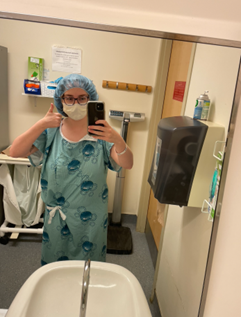
If you can’t tell, I’m frustrated — frustrated with a system that continuously hinders women from getting the answers they deserve. And it’s not just endometriosis. A recent study suggests that doctors frequently ignore or gaslight female patients, a bias ingrained in medicine for centuries. Women have historically been labeled as dramatic, their pain minimized, and their suffering dismissed, leading to a significant decline in quality of life. In the 18th and 19th centuries, a woman could be diagnosed with “hysteria” simply for expressing distress.
Today, that legacy lingers in the way women’s pain is overlooked.
As complicated as endometriosis is, it comes with a slew of symptoms that don’t always make sense. My diagnosis didn’t just explain my pain — it also validated my frustration with being constantly exhausted. As someone who is health-conscious, I try to reduce inflammation through my diet, get eight hours of sleep, exercise, and rest when I need to.
But no matter what I do, there’s always a nagging feeling that I should be doing more. As a student and a working professional with the privilege of a hybrid schedule, I often compare myself to my peers and feel guilty on days when I can’t keep up. In a world that glorifies hustle culture and the need to be constantly productive, I am exhausted.
And having a chronic illness only makes it ten times worse. I tend to overdo things — if I work out, have to study, and maybe choose to socialize with friends all within the same day over a drink, I need about three days to recover. My body goes into an inflammatory state, or what I like to call mother nature’s attacks, where I physically need to rest. When that happens, I miss out on social events, networking opportunities, and time with loved ones. Instead, I’m stuck in bed with my heating pad, hoping I have the energy to read a book or watch a movie.
So, in 2025, I’m making it my mission to listen to my body and not feel guilty when I need to rest. Juggling school and work makes it hard to do everything I want, but at the end of the day, rest has to come first. I want to silence that constant voice telling me I should be doing more, and I know I’m not alone in feeling this way. More than anything, I want to remind others that it is okay to rest. Because if you don’t, your body will eventually force you to — whether through illness, extreme fatigue, or total burnout.
Madison